
Hot-Dip Galvanizing vs. Alternative Coatings for Steel Grating: What Project Engineers Need to Know
Selecting the right surface treatment for steel grating is one of the most consequential decisions in any industrial project specification. The choice affects not only initial cost but service life, maintenance requirements, and long-term total cost of ownership. This article reviews the most common surface treatment options and their appropriate applications.
Hot-Dip Galvanizing (HDG)
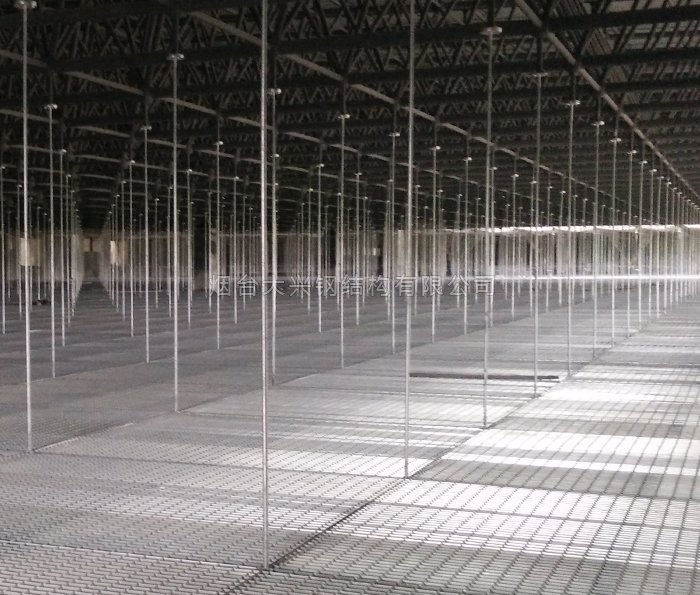
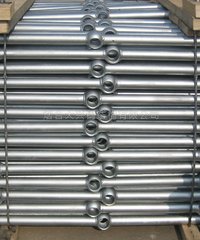
Hot-dip galvanizing remains the dominant surface treatment for carbon and alloy steel grating in industrial environments. The process involves immersing fabricated steel components in a bath of molten zinc at approximately 450°C, forming a metallurgically bonded zinc-iron alloy coating.
- Coating thickness: Typically 45–85 μm for grating products per ASTM A123, EN ISO 1461, or AS/NZS 4680
- Service life: 25–50+ years in most industrial atmospheric environments without maintenance
- Standards: GB/T 13912, ASTM A123, EN ISO 1461, AS/NZS 4680
- Best for: Outdoor industrial platforms, petrochemical facilities, ports, municipal infrastructure
Epoxy Coating and Paint Systems
Paint or epoxy coating systems are used where aesthetic appearance is important, or where the operating environment is incompatible with zinc (e.g., some chemical environments). Disadvantages include shorter service life, requirement for surface preparation and recoating, and less robust edge and weld protection compared to HDG.
Stainless Steel (No Coating Required)
For highly corrosive environments — chemical processing, food and beverage, pharmaceutical, coastal/offshore, or chloride-rich atmospheres — stainless steel 304 or 316 grating is often the most cost-effective long-term solution despite higher initial material cost. No surface treatment is applied; the natural passive oxide layer provides corrosion resistance.
316 stainless steel (with molybdenum addition) offers superior chloride resistance versus 304 and is the standard specification for offshore and marine applications.
Recommendation: For most industrial grating applications, hot-dip galvanized carbon steel offers the best balance of performance, durability, and cost. Stainless steel should be specified for corrosive process or marine environments where life-cycle cost analysis supports the premium.
Daxing supplies steel grating in hot-dip galvanized carbon steel, alloy steel, and stainless steel 304/316. All galvanized products include coating thickness reports. Contact ytdaxing@sina.com for technical specifications.